Hardwood Floor Problems to Assess Before Refinishing
Hardwood floors may need refinishing when the finish is worn, scratches expose bare wood, or stains remain after cleaning. HomeRemodelSammamish.link checks moisture damage, board movement, and finish depth before recommending refinishing.
Request an EstimateHow to Tell Whether Hardwood Floors Need Refinishing
Hardwood floor refinishing fits when worn finish, exposed wood, or persistent stains affect the surface and cleaning no longer restores it.
Surface scratches that stay within the finish may need a screen and recoat. Deeper scratches can expose bare wood and call for sanding and new finish. We check the damage pattern before choosing wood floor restoration, floor resurfacing, or a smaller repair.
Worn finish often looks dull near walkways and doorways. Deep stains, pet stains, and water marks may remain after careful cleaning. We also check whether the floor finish still bonds well to the wood.
Our team reviews the floor construction and prior coatings before work begins. See our Hardwood Floor Refinishing service page for how we plan this work.
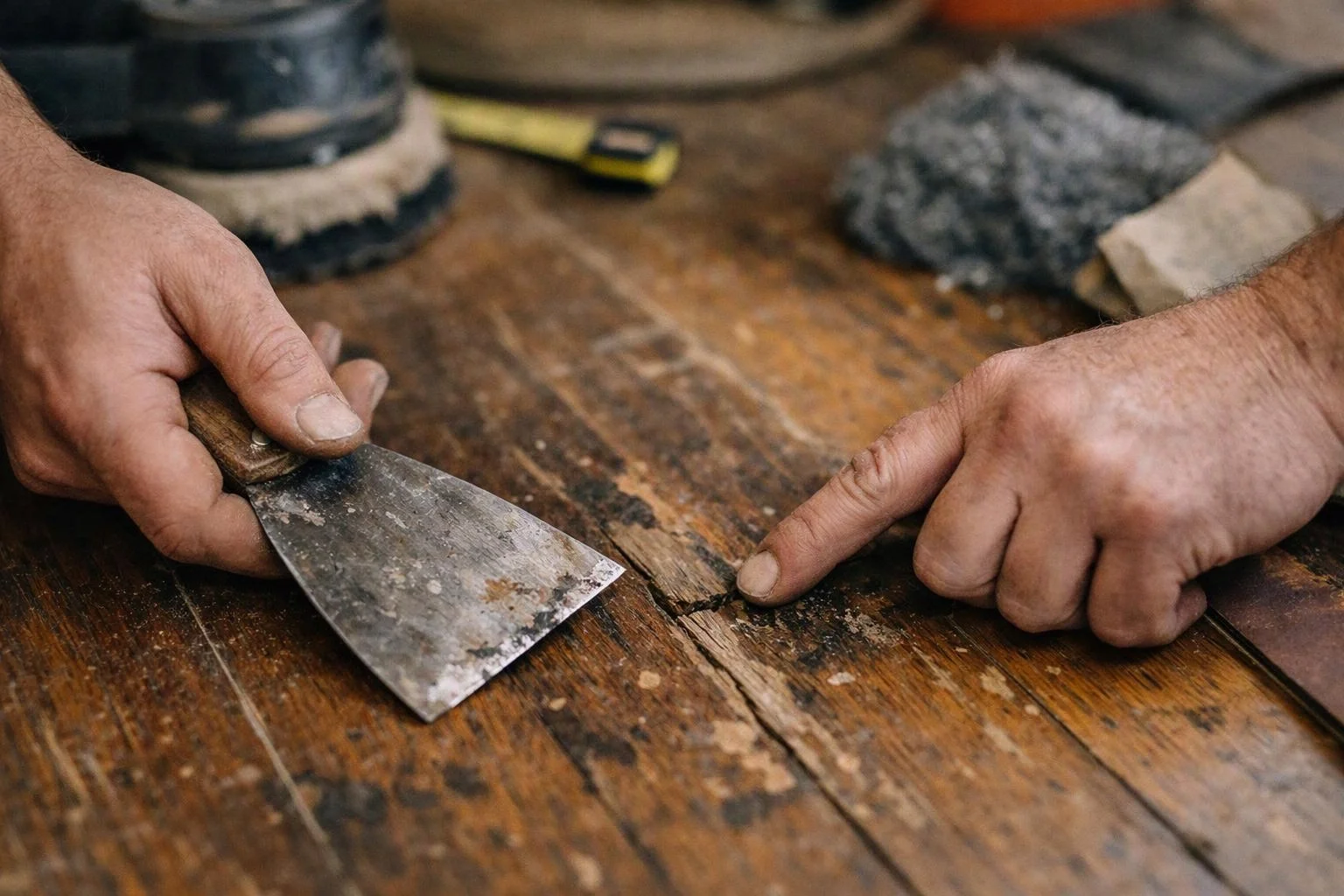
Signs That Need Repair Before Refinishing
Hardwood floor repairs come before refinishing when moisture, movement, loose boards, or structural damage affects the floor.
These signs point to a problem below the surface. We identify the likely cause before planning sanding or finish application.
| Sign | What it can mean | What we check |
|---|---|---|
| Cupping | Moisture below or above the boards | Moisture source, subfloor, and board movement |
| Crowning | A moisture imbalance or prior sanding issue | Floor flatness and moisture conditions |
| Loose boards or squeaks | Fastener or subfloor movement | Board stability and connection points |
| Wide gaps | Wood movement or changing moisture levels | Seasonal movement and floor condition |
We repair the cause when the floor cannot stay stable. Refinishing over movement can lead to uneven results and renewed finish failure.
Mistakes That Can Worsen a Hardwood Floor Refinishing Project
Hardwood floor refinishing can fail when the floor assessment misses moisture damage, weak boards, or poor finish conditions.
Each mistake increases the repair scope and can raise the total project cost. We connect the visible problem to its cause before sanding, coating, or board replacement.
Mistake: Refinishing Over Active Water Damage
Active water damage means the moisture source has not been controlled. Stained boards may keep cupping, swell, or develop a mold risk.
Covering the damage can increase the repair scope and waste finish materials. We locate the moisture source, assess affected boards, and plan floor repair before refinishing.
Mistake: Sanding Without Checking the Existing Floor
Floor thickness determines how much sanding the boards can safely receive. Engineered hardwood may have a thin veneer, while solid hardwood has a different construction.
Hidden nail heads, a thin wear layer, or past sanding can cause sanding damage. We identify the floor type, inspect the surface, and choose a sanding plan that protects usable wood.
Mistake: Choosing Refinishing for Boards That Need Replacement
Split boards, deep gouges, rotted wood, and burn marks may not improve through refinishing alone. Finish can change the color, but it cannot restore missing or weak wood.
Trying to sand these areas can expand the damaged spot and increase repair costs. We match board replacement to the existing floor before completing surface preparation.
Mistake: Treating Cupping and Crowning as Surface Problems
Cupping and crowning show that moisture imbalance or board movement affects the floor profile. Subfloor moisture can also change the floor’s flatness.
Sanding too soon can remove wood without solving the cause. We check moisture conditions, board movement, and subfloor concerns before deciding whether repair or refinishing is suitable.
Mistake: Skipping Repairs for Loose or Squeaky Boards
Loose boards and squeaky floors often point to weak fasteners or subfloor movement. New finish cannot create board stability.
Ignoring the movement can lead to recurring noise and coating stress. We secure unstable areas and include the needed repair scope before sanding.
Mistake: Covering Deep Stains With a New Finish
Pet stains, dark stains, and water marks can remain visible beneath a finish coating. Odor can also persist when contaminated wood stays in place.
A new coating may lock in the appearance without solving the source. We assess stain depth, consider wood bleaching or board replacement, and prepare the surface for proper adhesion.
Mistake: Using the Wrong Sanding Method
Uneven sanding and sanding marks can show through the final finish. An orbital sander and belt sander serve different parts of the sanding sequence.
Working against the wood grain or skipping dust control can leave visible defects. We select the sanding method for the floor and manage dust during surface preparation.
Mistake: Applying Finish Before the Floor Is Ready
Finish adhesion depends on clean, dry, and properly prepared wood. Dust, leftover residue, or trapped moisture can create coating defects.
Applying finish too early can require extra preparation and rework. We complete cleaning, drying checks, and surface preparation before finish application.
Mistake: Choosing a Finish Without Considering the Room
Floor finish should match the room’s traffic, sunlight, pets, and cleaning needs. Sheen also changes how scratches and surface wear appear.
A finish chosen without room conditions in mind may show wear sooner or require more care. We discuss finish sheen and daily use before recommending the coating system.
What Our Hardwood Floor Assessment Checks
HomeRemodelSammamish.link uses a floor inspection to connect visible damage with the right refinishing plan.
Our assessment keeps repair before refinishing when the floor needs stability first. It also helps us prepare a project quote that matches the actual work.
When to Call HomeRemodelSammamish.link Before Refinishing
Call HomeRemodelSammamish.link before refinishing when visible damage may involve moisture, movement, or weak boards.
Safe project planning starts with knowing whether the problem is cosmetic or structural. We assess the floor and explain the next practical step.
We can separate safe surface work from repairs that need attention first. That prevents sanding from hiding a larger floor problem.
How We Plan the Right Refinishing Work
HomeRemodelSammamish.link plans hardwood floor refinishing around the repair scope, sanding plan, and room conditions.
We first decide whether the floor needs finish recoating, full sanding and refinishing, stain removal, or board replacement. Then we match the sanding method and finish selection to the floor’s construction and use.
Our team includes preparation, dust control, repairs, finish application, and cleanup in the project quote. Contact us through our contact page so we can review the floor and discuss the right plan.
HomeRemodelSammamish.link helps homeowners avoid preventable refinishing mistakes. We address moisture, movement, surface wear, and finish adhesion before the work begins.
Questions About Hardwood Floor Refinishing Problems
Can hardwood floors with water damage be refinished?
Yes, hardwood floors with water damage can be refinished after HomeRemodelSammamish.link controls the moisture source and repairs affected areas. We check for cupping, staining, weak boards, subfloor concerns, and possible mold risk before choosing the finish work.
What is the difference between cupping and crowning on hardwood floors?
Cupping means the board edges rise higher than the center, while crowning means the center rises higher than the edges. Both conditions can relate to moisture imbalance or prior floor movement, so we check moisture and flatness before sanding.
Can deep scratches in hardwood floors be removed by refinishing?
Yes, hardwood floor refinishing can improve many deep scratches when the surrounding wood remains sound. We check whether scratches have become deep gouges or exposed damaged boards that need repair first.
When should hardwood floorboards be replaced instead of refinished?
Hardwood floorboards should be replaced when they are split, rotted, badly burned, or damaged beyond safe sanding. We compare the damaged boards with the surrounding floor and include board replacement when refinishing cannot restore stability or appearance.