Deck Problems to Check Before Deciding Between Repair and Replacement
Deck repair usually fits when damage is limited and the framing remains sound. Deck replacement makes more sense when rot, movement, failed connections, or widespread damage affect safety; HomeRemodelSammamish.link checks the full structure before recommending either option.
Request an EstimateHow Do You Decide Between Deck Repair and Replacement?
Deck repair fits localized damage with sound framing, while deck replacement fits widespread damage or unsafe structural movement.
We check the surface and the load-bearing parts together. Our review covers deck framing, structural safety, connections, stairs, and railings before we define the repair scope.
Homeowners can use our Deck Repair service when the structure supports a focused fix. We recommend deck replacement when repairs would leave unstable or repeatedly failing parts in place.
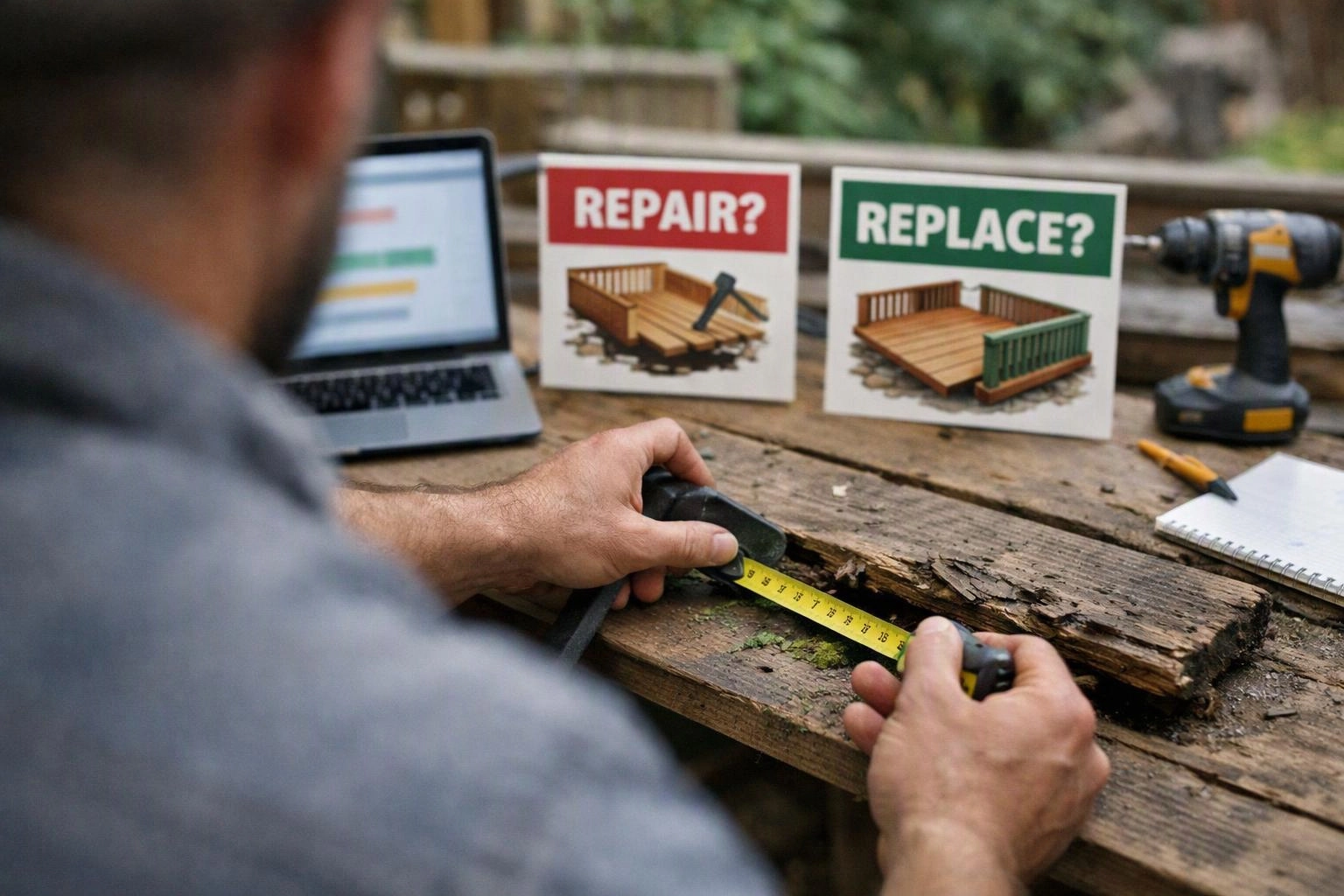
Compare the Deck Problems That Change the Decision
Each deck component can point toward repair or replacement. Our team compares the visible damage with the support below it.
The table shows how we connect common problems to the next safe step.
| Component | Problems to check | Likely direction |
|---|---|---|
| Deck boards | Cracked boards, soft wood, stains, and loose boards | Repair when damage stays localized; replace more when decay is widespread |
| Deck framing and joists | Damaged joists, sagging areas, and weak joist hangers | Repair or replace framing based on load support and decay |
| Ledger board | Movement, failed attachment, missing flashing, and water intrusion | Repair only when the house connection remains sound |
| Posts and footings | Unstable posts, decay, shifting, or settled footings | Use structural repair when practical; replacement may be needed for broad movement |
| Railings and stairs | Loose railing posts, weak guard connections, worn treads, and damaged stringers | Repair isolated parts; replace sections that cannot provide safe support |
| Deck fasteners | Rusted fasteners, missing bolts, and loose screws | Replace failed connections after checking the surrounding wood |
Mistake: Checking Only the Surface Boards
Checking only deck boards can hide wood rot in the framing below.
Surface boards may look worn while joists or beams hold hidden structural damage. We lift the concern beyond the walking surface and trace decay into the support system.
The cost changes with the damage location and repair scope. Our fix may include board replacement, framing repair, or a larger rebuild when rot spreads through connected parts.
Mistake: Ignoring Soft or Spongy Wood
Soft or spongy wood signals possible wood decay or moisture damage.
Water can weaken deck joists and deck posts even when the outer surface looks acceptable. We check soft areas and follow the moisture path before choosing materials or repairs.
The cost depends on how far decay has traveled and whether load-bearing parts need replacement. We remove unsafe material and restore sound support as part of the repair scope.
Mistake: Treating Wobbly Railings as a Small Issue
A wobbly deck railing needs attention because loose support can affect fall safety.
Loose railing posts and weak guard connections may come from decay, poor attachment, or movement in the deck framing. We inspect the posts and their connection points before repairing the railings.
The cost follows the railing damage and the condition of the supporting structure. We repair stable connections and replace damaged parts that cannot hold a secure guard.
Mistake: Overlooking Deck Movement
Deck sway or a sagging deck can indicate structural movement that needs more than surface work.
Movement may involve the deck ledger, post connections, or footings. We trace the movement from the walking surface to the load path and check whether settled footings or loose connections contribute to it.
The cost changes with the source of movement and the amount of framing involved. Our fix addresses the failed support instead of covering the symptom with new boards.
Mistake: Replacing Boards Without Checking the Joists
Replacing deck boards without checking the joists can leave framing damage underneath.
Damaged joists, weak joist hangers, and water intrusion can reduce support for new boards. We inspect the framing while the surface is open and connect board work to the full repair plan.
The cost depends on whether the work stays at board replacement or reaches the framing. We repair or replace damaged support before installing a new walking surface.
Mistake: Leaving Rusted or Missing Fasteners in Place
Rusted fasteners and missing bolts can weaken a deck connection.
Corrosion can reduce the grip of screws, bolts, and other deck fasteners. We check nearby wood for splitting or decay because connection failure may damage more than the fastener itself.
The cost changes with the number of failed connections and the condition of the attached parts. Our fix replaces unsafe hardware and restores the surrounding connection when needed.
Mistake: Forgetting the Ledger Board and House Connection
A ledger board problem can affect the deck attachment and the house connection.
Missing or damaged flashing can allow water damage near the house rim joist. We inspect the ledger, flashing, attachment points, and nearby framing before recommending work.
The cost follows the water intrusion, connection damage, and access to the affected area. We correct the source and restore the attachment when the existing structure can support repair.
Mistake: Repairing Stairs Without Checking Their Support
Deck stairs need support checks before repairing treads or risers.
Damaged stringers or weak stair framing can make new stair treads unsafe. We inspect the full stair assembly, including its attachment to the deck and its lower support.
The cost changes with the condition of the stringers, treads, risers, and supporting framing. We repair isolated stair parts when the structure remains sound and rebuild the assembly when it does not.
Mistake: Choosing Replacement Before Finding the Cause
Choosing replacement before finding the cause can leave the same deck problems in the new structure.
Poor drainage, limited deck ventilation, moisture management issues, and design defects can lead to repeated wood decay. We identify water paths and airflow concerns before planning deck construction or deck reconstruction.
The cost depends on the cause, the damage extent, and the design changes required. Our fix combines sound materials with better drainage and durable construction details.
Which Deck Problems Usually Need Repair or Replacement?
Localized boards, railings, or connections may support repair, but widespread rot, unstable framing, or repeated failures point toward replacement.
Localized damage supports a focused repair when surrounding deck framing remains sound. Full replacement becomes more practical when wood rot reaches several structural parts or when the deck has ongoing movement.
We also consider deck safety, access, drainage, and the likely life of the repair. A clear repair scope protects sound components, while a replacement scope addresses the whole structure when isolated work would not solve the cause.
What Does Our Deck Assessment Check?
Our deck assessment checks the visible condition, structural support, connections, and moisture sources before we recommend work.
When Should You Call HomeRemodelSammamish.link?
Call HomeRemodelSammamish.link when deck damage may affect support, access, or fall safety.
How Does the Deck Repair or Replacement Process Work?
Our deck process starts with a site assessment and ends with a defined project scope and quote.
We first inspect the surface, framing, connections, stairs, railings, and moisture sources. We then explain whether deck repair, deck restoration, or deck construction best fits the structure.
Our recommendation separates necessary structural work from finish choices. The quote reflects the damaged parts, materials, access, framing needs, and selected design.
We discuss the work before construction begins, so you understand what will be repaired, replaced, or rebuilt. Our crew follows the approved scope and checks the completed work against the safety requirements that apply to the project.
What Changes the Cost of the Recommended Work?
Deck work costs change with the damaged parts, structural scope, materials, access, and whether repairs or full reconstruction are needed.
Damage location matters because board work differs from ledger, joist, post, or footing work. Damage extent also matters because localized repair uses a smaller scope than full replacement.
Material choice, deck design, access, drainage corrections, and framing replacement can change the work required. We review those factors during the assessment and provide an exact quote based on your deck.
HomeRemodelSammamish.link can help you choose a safe path between repair and replacement. Contact us through our contact page to discuss the condition of your deck.
Questions About Choosing Deck Repair or Replacement
Can a deck with rot be repaired?
Yes, HomeRemodelSammamish.link can repair a deck with rot when sound framing remains around the damaged area. We replace decayed parts and check the moisture source so the repair addresses more than the visible surface.
Is a wobbly deck safe to use?
No, a wobbly deck shouldn't be treated as safe until its movement is assessed. We check the ledger, posts, footings, connections, and framing to identify the cause.
Should I replace deck boards if the framing is damaged?
No, replacing deck boards alone won't solve damaged framing. We assess the joists, hangers, beams, and connections first, then plan the surface work around sound support.
What deck damage should I not repair myself?
Don't repair structural movement, ledger connections, unstable posts, settled footings, or unsafe railings yourself. We inspect these load-bearing and fall-safety components and complete the work within the required construction standards.